Translate

Visualizzazione post con etichetta Galerie Perrotin. Mostra tutti i post

28/05/26

Lee Mingwei attenzione al tempo


Nella sede di la galleria Perrotin presente il lavoro di Lee Mingwei che adotta un approccio diverso dalla nostra comune concezione di arte. Mentre la maggior parte degli artisti cerca di imporre la propria visione del mondo racchiudendola in un oggetto, Lee Mingwei fa l'opposto. Interroga il mondo e non offre risposte. E in questo modo interroga anche noi. Direttamente.
Una domanda, mai un'affermazione.

Espressa attraverso un oggetto o un gesto apparentemente insignificante, questa domanda si rivolge a un soggetto individuale. La risposta, quindi, appartiene a noi; sarà sempre profondamente personale, toccando la parte più intima del nostro essere.

Assumere la bellezza come percezione complessiva del mondo, come fa oggi Mingwei, è una posizione categorica che sfida la brutalità e il cinismo del nostro mondo. Parlare di bellezza, quindi, non significa fuggire, ma combattere. L'opera di Lee Mingwei è pertanto radicalmente politica.


Quando la bellezza appare.

Qual è il nostro rapporto con la bellezza?

Che cos'è, dove si nasconde, quando appare e in quale forma?

Questo interrogativo permea tutte le opere di questa mostra: una serie di sette pezzi creati tra il 1995 e il 2025, esposti insieme per la prima volta.

La maggior parte delle opere di Mingwei possiede un elemento effimero e contingente. Ad esempio, un'opera è destinata a rompersi al momento giusto, mentre un'altra deve essere donata per poter esistere. Alcune di esse sono configurate come rituali.

Il rituale possiede la particolare qualità di poter trasformare un oggetto in una durata. L'opera d'arte si incarna pienamente in questo breve lasso di tempo. Il rituale si ripete, ma la situazione che crea è nuova ogni volta, poiché la persona che lo vive è unica.


Un'accoglienza discreta; l'importanza dell'abbigliamento; una certa solennità; la qualità raffinata dei materiali; la lentezza; fili colorati disposti su una parete; alabastro trasparente; l'oscurità; gesti misurati; e il silenzio. Questi sono alcuni degli elementi figurativi che servono al momento fugace e restituiscono la forza emotiva dell'esperienza. Il rituale è l'espressione della loro presenza tacita. Ecco perché i rituali devono essere portati in vita, vissuti e rivissuti ancora.


Limitandosi alle questioni essenziali (che in definitiva sono pochissime), l'artista trasforma la sua opera in una questione etica. Per questo motivo, il suo lavoro non contiene molti oggetti e non si articola in serie prolisse. Al contrario, una delle caratteristiche della sua arte è proprio l'impossibilità di essere oggetto di produzione di massa. Non aderire alla modalità dominante della sovrapproduzione significa essere profondamente connesso al suo tempo, o, quantomeno, al nostro. Sostituire la sovrapproduzione con il rituale, la ripetizione o la scomparsa; esplorare il gioco delle relazioni personali; puntare all'intimo; considerare la fragilità una forza; o orchestrare l'incontro casuale di due sconosciuti in un momento condiviso – attorno a un semplice fiore, ad esempio – è certamente l'offerta più bella possibile nel mondo odierno, dove l'ascolto degli altri è diventato un'eccezione. Per Lee Mingwei, l'offerta non ha un "perché" né una conclusione. È lì che, forse in quell'unico istante, si manifesta la bellezza.

E il più delle volte è ineffabile, inesprimibile, immateriale e non negoziabile. 


06/12/22

Ivan Argote a Parigi da Perrotin


Tenere sensibilità naturali, quotidiani stati emotivi, con le opere di Ivan Argote alla galleria Perrotin a Parigi.


12/12/19

Georges Mathieu a Hong Kong


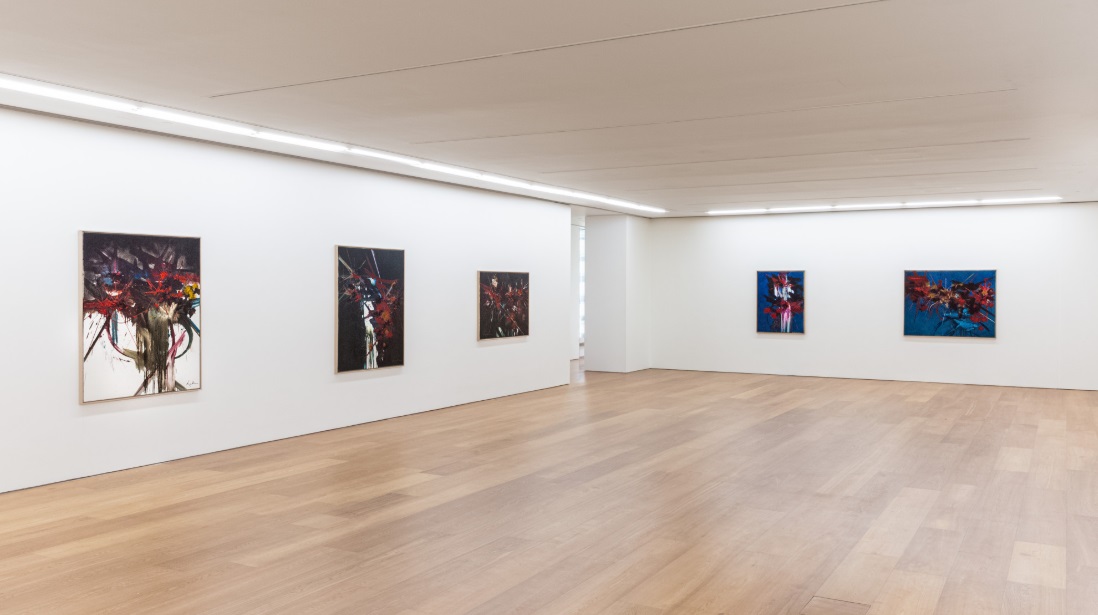
Presso gli spazi a Hong Kong della galleria Perrotin è in corso una bella mostra su Georges Mathieu, con una selezione delle sue opere fra gli anni 1989 – 1990 col supporto di Nahmad Contemporary.


14/05/19

I mattoni di Othoniel


La galleria Perrotin, in rue de Turenne76, a Parigi presente la recente produzione di Jean-Michel Othoniel che passa dal successo delle sue perle vetrate al fascino massiccio del mattone, geniale ed affascinante come sempre. 


20/01/19

Il nuovo sito di Perrotin


Il recente rinnovamento del sito della galleria Perrotin di Parigi mette in risalto come sempre più l' attività di promozione e vendita d'arte passa attraverso i siti web, oramai diventati la vetrina principale dell'attività galleristica. 


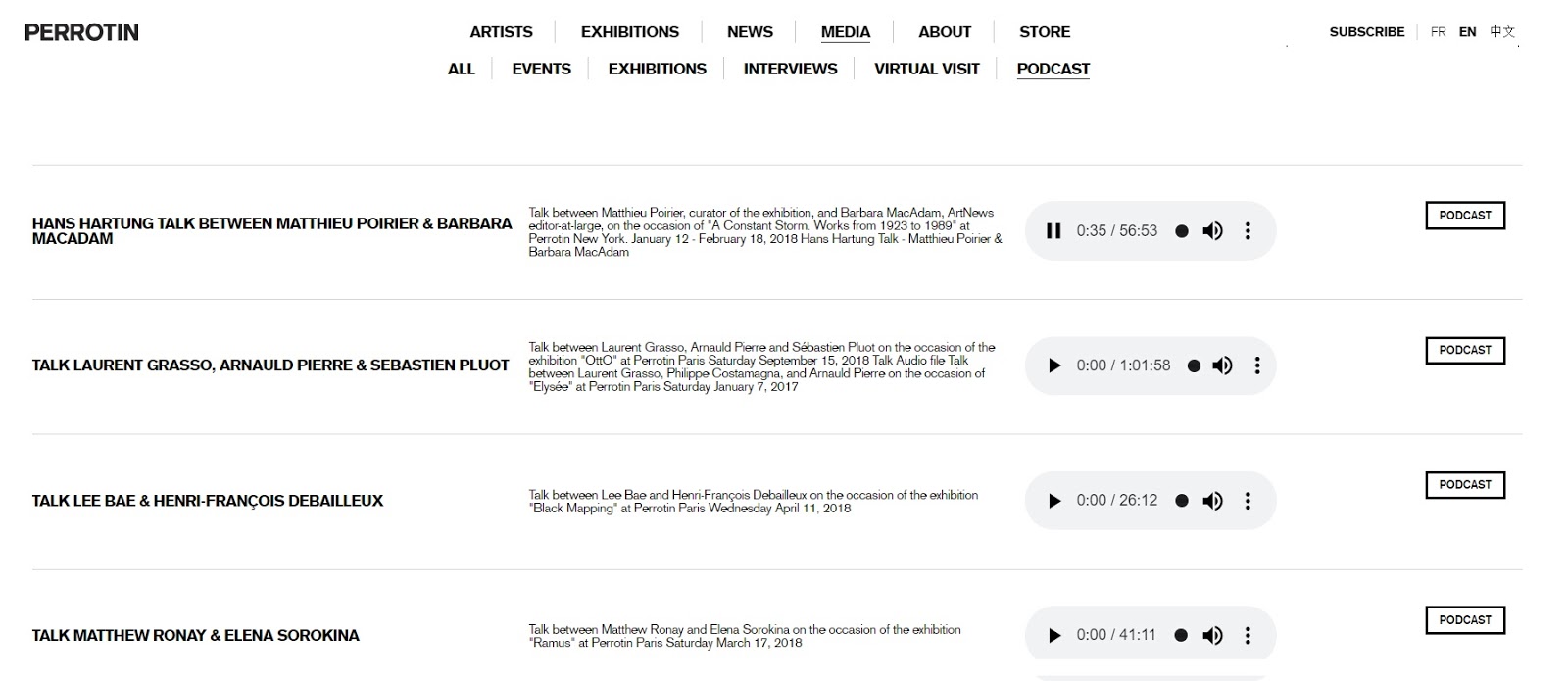
Ovviamente solo nella fisicità dello spazio galleristico la fruizione dell'opera d'arte è la più corretta, ma una buona gestione di tutta la promozione che passa per la sezione media di un sito con i video, materiale informativo sulla mostra, fotografie, conversazioni degli artisti e curatori, aiuta ad approfondire l'evento espositivo e a darne una visione più articolata. 

09/06/18

Efiaimbelo da Perrotin


La galleria Perrotin di Parigi presenta le stupende opere di Efiaimbelo


CS

In collaboration with André Magnin, African art expert, Perrotin Paris is very pleased to present an exhibition dedicated to the aloalo of Efiaimbelo and his disciples. Efiaimbelo, Madagascan sculptor deceased in 2006, owned his knowledge to his great grandfather Soroboko. Over the years, he developed his art and passed it on to his son Jacques Jean Efiaimbelo, and his grandson Jean Colomb Efiaimbelo, their turn becoming “disciples” of the art.

Today, only five members of the clan perpetuate this unique practice in the same style as their distinguished inspirer.

Usually sculpted out of Mendorave, a very dense, rare and sacred wood exclusively cut and handled by sculptors; the aloalo is a vertical sculpture that reaches about 2 meters high (6.5 feet) divided in two distinct parts. The base of the sculpture is a pole.

It’s upper middle part is carved into eight (the number of wholeness) successive geometric motifs painted in vivid colors.

The first seven motifs are an alternating succession of diamondlike or half-moon-like figures that respectively represent, according to tradition, a Zebu’s forehead and a sleeping dog.  

The last symbol of the pole is a full moon adorned with sun rays that evokes light, life and eternity.


This pole is topped with a horizontal platter of varyingdimensions, on which stands a figurative scene, sculpted in the round. Practiced by the Mahafaly in the great South of Madagascar since the 18th century, the aloalo is typically sculpted in memory of the deceased while celebrating the living with prestige. Efiaimbelo was one of the first to modernise thealoalo, by painting it and diversifying its figurative scenes combining knowledge and traditional stories. Every aloalo depicts a moment of daily life, a tale, a legend, ancestral wisdom, or a stories shared by members of the Termaromainte clan and their benefactor, Soroboko Avisoa.

To quote the anthropologist Paul Rabibisoa Rovoay: “The Mahafaly artist Efiaimbelo has placed the aloalo at the center of his art. In addition to contributing the endless inventiveness of his carvings to this art form, he has also played a significant part in the introduction of color and the revitalizing of themes. Reoccurring elements in Efiaimbelo’s aloalo are: a brightly colored (or black and white) ox known as a zebu, which expresses passion and prestige; a warrior, who conveys sovereignty; a couple of birds, which symbolize love and faithfulness; a policeman, who embodies the law and the strength of the new regime; a bush taxi, a motorcycle, and an airplane, which materialize travel, the city, progress, and technology.” 


The descendants of Efiaimbelo, members of the Temaromainte clan live on the land of their Ancestors, amongst the “invisible”, in Androka. Their homes consist of a couple shacks protected by thorn trees and cactuses. The sculptures of Efiaimbelo were exhibited for the first time in 1989 in a show entitled “Magiciens de la terre” at the Grande Halle de la Villette, in Paris. André Magnin’s pursuit of Efiaimbelo’s work, while spending time alongside the artist’s children, family and the Temaromainte clan that he became a member of, has allowed the exposure of these Aloalos; notably at the Galeries nationales du Grand Palais, Paris (2011); at the Guggenheim Museum, Bilbao (2007); at the Museum of Fine Art, Houston (2005); at the Grimaldi Forum (2005); at La Caixa foundation, Palma de Majorque; at the Palais de la Virreina in Barcelone (1994-1995); at the Groningen Museum (1992); at the Centro de Arte Contemporáneo, Mexico (1992); at the Saatchi Gallery, London (1992), at the Centro Atlántico de Arte Moderno, Las Palmas de Gran Canaria (1991).

This exhibition is organized twenty years after the first presentation of Efiaimbelo’s work at the Perrotin gallery in 1998. Perrotin New York will also present an exhibition dedicated to aloalo from June 27 to August 17, 2018. 10% of the revenue of each sale will be donated to the Azé Charity www.aze-asso.org that supports the underprivileged and deprived children of Tuléar, in the South West of Madagascar, through education.

06/02/18

Izumi Kato da Perrotin


La galleria Perrotin nella sede di Hong Kong presenta le opere di Izumi Kato. 


CS 
Following exhibitions in Hong Kong, Paris and New York, Perrotin is pleased to present Izumi Kato’s second solo exhibition in Hong Kong. Kato returns to the Asian hub with new works after four years during which the artist set up a coastal studio near a long strip of a reclaimed landfill laden with irregularly shaped granite pieces that inspired the artist. This exhibition consolidates almost two years of Kato’s artistic practice, with new materials incorporated into his creation.

The latest Untitled series utilizes this type of common granite, selected from the shore by the artist, unaltered or unchiseled, and the artist then selects the most suitable shape and pattern before developing the color palette for the specific piece. This attempt is novel in the sense that it is the first time a type of material has been brought into the creation process not for its functional use, but rather, for its natural aesthetics. In this case, the physical shape and form of the stones have been left pristine, and has influenced the artistic creation process. 


This process reinvigorates the essence of the “Found Object” (objet trouvé) movement, however, there is also a layer of Japanese aesthetics defined by the innate quality that has become a part of the work. This process and outcome have already been seen from some of the artist’s past works in which antique furniture had been selected to seat or serve as a stand for his wooden sculptures. A selection of his drawings are also placed in vintage frames that have been collected by the artist from various sources. 


27/04/17

Tatiana Trouvé a Hong Kong


La galleria Perrotin di Parigi espone fino a metà Maggio, negli spazi di Hong Kond, una mostra di Tatiana Trouvé.


CS

TATIANA TROUVÉ “HOUSE OF LEAVES” Perrotin, Hong Kong March 20 - May 17, 2017 Opening Reception: Monday March 20, 6-8 pm Perrotin gallery, Hong Kong, is happy to present a solo exhibition of Tatiana Trouvé entitled “House of Leaves”from March 20 to May 17, 2017. The exhibition will comprise a series of new works. The opening will be held within the same week as ArtBasel Hong Kong. “To inhabit is to be at home everywhere”. This curious openness to the world, which the Italian architect Ugo La Pietra made his program, has long captivated my attention because it emphasizes mobility and outlook as the only ways to be at home, potentially, everywhere. In contrast to sedentariness and property, habitation no longer designates anything here other than this singular scope of vision. In the 18th and 19th centuries, men had miniature images of their eyes painted on a fine slice of ivory and set into rings or brooches which they sent to the women they secretly loved. The women who carried this secret declaration on their fingers indicated that a man had fixed this gaze upon them and that he had captured them. With these “eyes of love,” the gaze that looks at me and which I carry, becomes also the one with which I look. I like thinking that the reach of our gaze also contains the look of another, just as when we walk, we follow the footsteps of another. I like thinking that inhabiting is a way of seeing, and resting our gaze on an object or a landscape, familiar or foreign, to which we are connected without belonging to it. 


And if the host of these ways of inhabiting is inevitably an individual who travels, who belongs to the world as much as the world belongs to him, no doubt only one habitat enables him to fulfill his experience of life: the hut. To be at home everywhere requires, it seems to me, ephemeral architecture, without threshold, where the dimensions of domestic and wild, the boundaries of interior and exterior, inside and outside, overlap and harmonize, forming an intermediate world that forges a way of reconnecting with the world. It does not matter if these constructions seem unstable, or if they could blow away with the first gust of wind. They are not made to resist the world but to merge with it, up close and far away, here and unto infinity. Tatiana Trouvé

23/10/11

Le Gallerie parigine nei giorni de le Fiac

La serata di Giovedì 20 Ottobre è stata una grande kermesse con le tante gallerie aperte, soprattutto nel quartiere del Marais, presentiamo qui sotto alcune immagini.


Intervento di Xavier Veilhan alla Galerie Perrotin

La vasta pittura Romain Bernini e Youcef Korichi da Suzanne-Tarasieve

da Vallois le opere di Alain Bublex

Claude Lévêque da Kamel Mennour